"What motivates you to walk the Camino de Santiago?" a woman asks me at the entrance to Palas de Rei. She's standing under a wooden shed, stamping pilgrim passports. I hesitate, rummaging in my backpack for mine. I'm not quite sure what to say.
“I’m looking for answers to some questions and a few other things,” I spontaneously say, probably the most common answer of everybody. That’s not the truth at all, but I felt a bit ashamed at that moment to admit that I originally just wanted to hike and camp, to live out my dream of adventure and romance, and that I only chose the Camino de Santiago to reassure my friends and family. Traveling alone as a woman? You can't be serious! With a backpack and tent? Oh my goodness! Sleeping outdoors? Good heavens!
Finally I decided on the Camino de Santiago, specifically the approximately 800-kilometer-long Camino Francés, probably the most popular and frequently traveled route, because to everyone's relief there I would definitely not be alone.
The Camino Francés goes from Saint-Jean-Pied-de-Port in France, across the Pyrenees through Navarre, then on through the Basque Country, La Rioja, Cantabria, Asturias, and Castile and León to Santiago de Compostela in Galicia. The route encompasses several climate zones, but in June it shouldn't get so cold at night that I would freeze in my tent. Of course I could sleep in one of the many available hostels, but that's precisely what I don't want. I want to camp. And I still have a whole year to plan and prepare myself mentally.
I packed my rucksack almost completely six months in advance, leaving only a few small items to be removed, but I never actually did a test hike with it. According to my bathroom scale, the sack weighs nine kilograms, so it will quickly reach eleven to twelve kilos once I add water and food. As far as hiking itself is concerned, I am in good shape. I've worn my hiking boots on quite a few long hikes, so I'm not too worried. However, I've never actually hiked with this much gear on my back, and certainly not for distances of at least twenty kilometres every day for several weeks. The contents of my rucksack will most likely change from time to time, but for now it includes all the things I can't imagine ever being without.
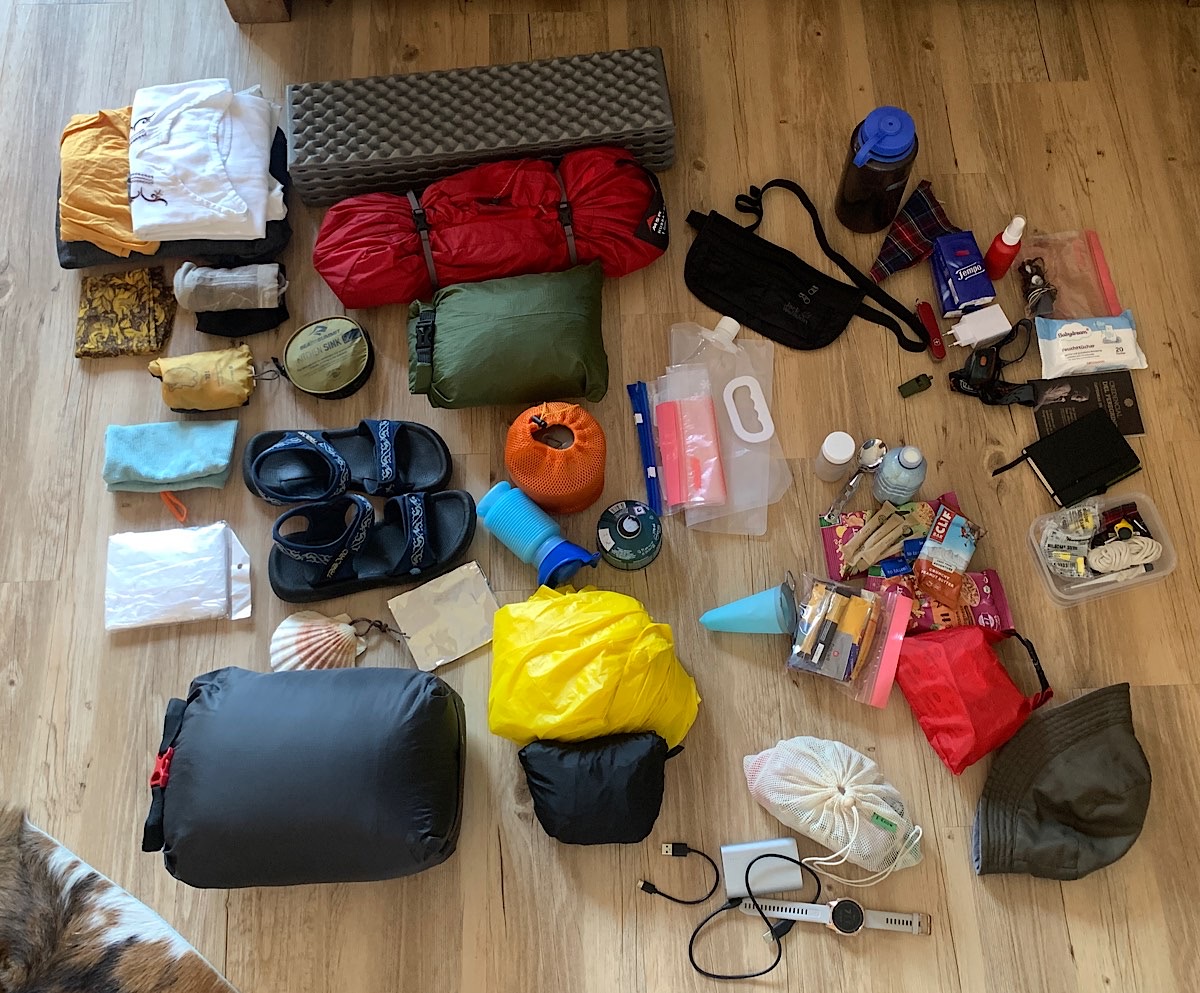
So this is my packing list:
Tent, down sleeping bag, sleeping mat (slightly shortened to reduce weight), rain poncho, sandals, collapsible bowl, two small gas canisters, mini stove, titanium pot, three-litre water bag, washcloths as towels, toiletries and creams (all in mini containers), first-aid kit and plaster strips, sun hat, collapsible drinking cup and daypack for afternoon sightseeing, bum bag for valuables, sports watch, power bank, MP3 player, cords, tick tweezers, whistle, pocket knife, headlamp, earplugs, clothespins, small carabiners for attaching things to the backpack, journal and pencil, a bag with instant coffee, tea bags, sugar and milk powder, and finally my scallop shell, the symbol of the Camino, which I will attach to my rucksack. For clothing, I am taking long wool trousers and thin hiking shorts. In addition, two T-shirts, a very thin and feather-light linen blouse, a light windbreaker and a fleece pullover. Two sets of underwear are sufficient; anything not currently being worn dries freshly washed on the rucksack.
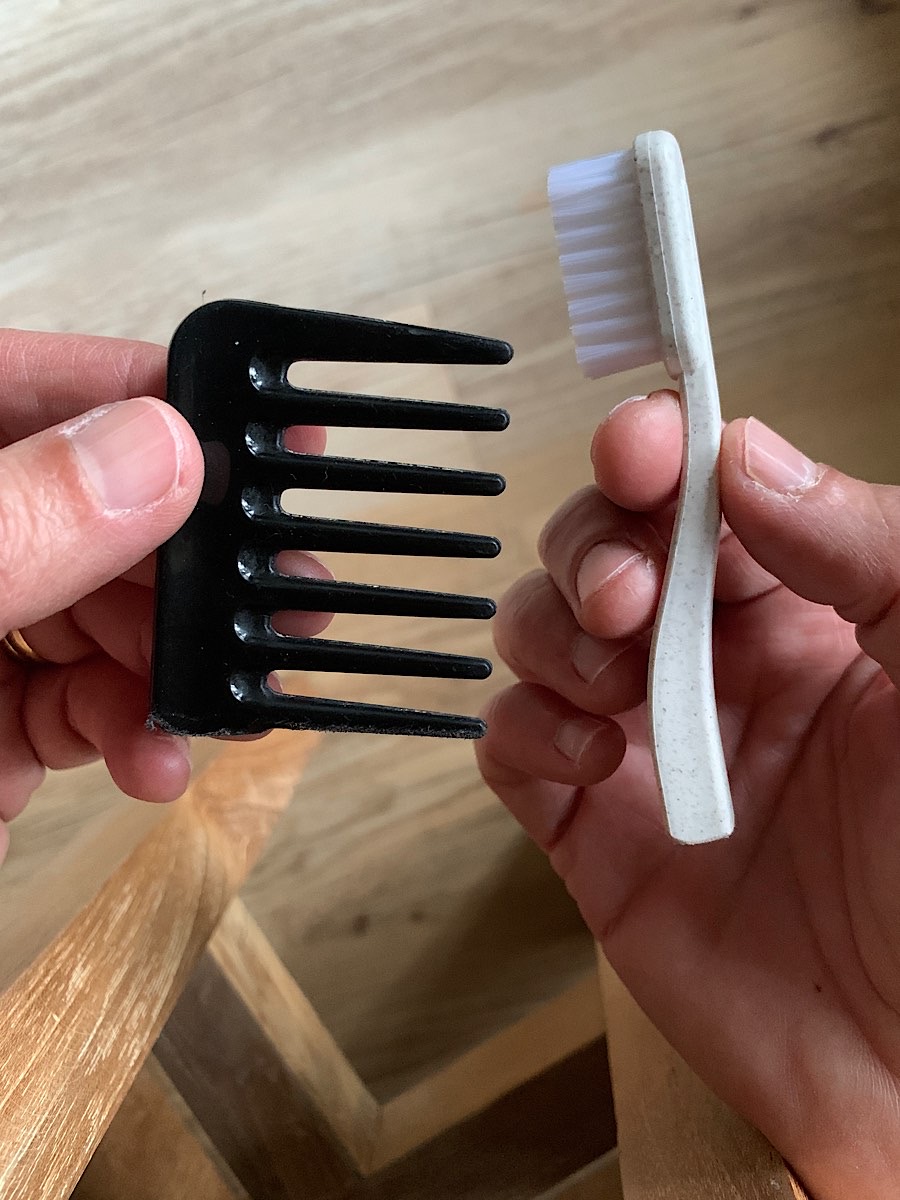
In the end I left my rain pants and water bottle at home. I don't bother if my legs get wet, and a regular PET bottle weighs less. Every gram counts! I even sawed off the end of my comb and broke off the handle of my toothbrush. Whether that makes any difference in the end remains to be seen.